
When a semi-truck, tractor-trailer, or other large commercial vehicle causes harm, the consequences are often catastrophic for victims. These cases involve complex facts, serious injuries, and multiple parties—each pointing fingers to avoid responsibility. At Miller Tourtlotte Law, PLLC, we understand the unique legal and emotional challenges you’re facing following a truck crash. You may be dealing with life-altering injuries, the loss of a loved one, or pressure from an insurance company that wants to settle quickly and quietly. These aren’t just routine personal injury claims. They involve federal safety regulations, aggressive defense tactics, and corporate interests that often put profit over accountability. We focus on holding trucking companies, drivers, and other liable parties accountable under the law.
In this piece, Miller Tourtlotte Law, PLLC explains important information about truck accidents in Montana, including the legal options available to victims, the possible types of financial compensation that can be received, and how a Yellowstone County truck accident lawyer attorney can fight on the victim’s behalf to obtain compensation and justice.
Types of Truck Accidents You Should Know About
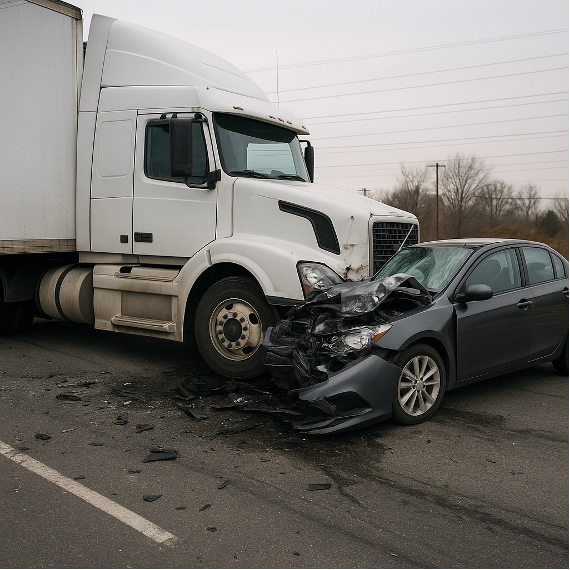
Rear-End Collisions — These happen when a truck crashes into the back of another vehicle. Because trucks take longer to stop, even a short distraction can lead to a devastating rear-end crash. In Montana, drivers must follow safe distances under MCA § 61-8-329. These accidents often happen at stoplights or in traffic when a driver isn’t paying attention or is too tired to react.
Jackknife Accidents — A jackknife happens when the trailer of a truck swings out at an angle from the cab, forming an L or V shape. These crashes often block multiple lanes and cause chain-reaction accidents. They’re usually the result of slippery roads or sudden braking, and they’re made worse when the truck is overloaded or poorly maintained.
Rollover Accidents — Trucks are top-heavy, so when a driver takes a curve too fast or the load shifts suddenly, the entire truck can flip onto its side. These rollovers are especially common on off-ramps, sharp turns, or uneven roads. Montana’s load securement rules—part of the adoption of federal regulations under Montana Administrative Rule 18.8.1502, which incorporates 49 CFR § 393—are key to preventing rollovers caused by improper loading.
Underride Accidents — These tragic crashes happen when a smaller car slides under the back or side of a trailer. They often result in fatal injuries. Montana follows 49 CFR § 571.223 and § 571.224, which require rear impact guards on many trucks, but side guards are not always mandated. A lawyer may use violations of these federal standards to prove fault.
Blind Spot (No-Zone) Accidents — Every large truck has huge blind spots on all sides, especially along the sides and directly behind the trailer. When a driver changes lanes or turns without checking those blind spots—or when a car lingers in them—serious crashes can happen. Under MCA § 61-8-336, drivers must ensure it’s safe before changing lanes.
Tire Blowouts — Blowouts can send tire shreds flying into traffic or cause the truck to swerve into other lanes. These usually come from poor tire maintenance, overloaded trailers, or hitting road hazards. Trucking companies are expected to follow strict tire inspection rules under 49 CFR § 396.17, adopted in Montana through Montana Administrative Rule 18.8.1502.
Cargo-Related Accidents — When freight is loaded unevenly, not secured properly, or too heavy, it can fall out of the trailer or cause the truck to lose balance. These accidents are more common when third-party companies handle the cargo. Both state and federal law—including 49 CFR § 393.100—set rules for securement. Failing to follow these can be used as proof of negligence.
Wide Turn Collisions — Trucks need extra space when turning right, often swinging left before making the turn. When they don’t check for cars beside them or take the turn too tightly, they can trap other vehicles or hit them. Montana’s laws on turning movements, including MCA § 61-8-336, require turns to be made safely and only when the path is clear.
Common Injuries You Can Suffer in a Montana Truck Accident
Traumatic Brain Injuries — A hard hit to the head can cause your brain to move suddenly inside your skull, leading to anything from a mild concussion to permanent brain damage. These injuries often happen when your head hits the steering wheel, window, or pavement after a serious truck crash.
Spinal Cord Damage — Your spine can be crushed or twisted by the impact, especially in high-speed collisions or rollovers. This can lead to partial or full paralysis. Even less severe damage might cause long-term pain, mobility issues, or nerve damage that never fully heals.
Crush Injuries — When a truck pins you or your vehicle during the crash, it can crush bones, muscles, and organs. These injuries often require surgeries, amputations, or long-term rehabilitation.
Severe Burns — Fires caused by fuel leaks, electrical sparks, or hazardous cargo can leave you with deep burns. These injuries are extremely painful, may require skin grafts, and often result in long-term scarring or limited use of the affected area.
Multiple Fractures — It’s common to break several bones in a truck crash, especially in your arms, legs, ribs, or pelvis. Some breaks are so bad they require metal plates or rods. Recovery can take months, and not all fractures heal cleanly.
Internal Injuries — Damage to organs like your liver, spleen, or lungs may not be obvious right away but can be life-threatening. Internal bleeding is a medical emergency that often requires immediate surgery.
Where Truck Crashes Happen Most in Yellowstone County
Interstate 90 in Billings and Laurel — I-90 is the busiest interstate in Yellowstone County and a major corridor for long-haul trucking across Montana. Crashes often happen near exit and entry ramps, especially around Billings and Laurel, where local traffic merges with heavy freight flow. Rear-end collisions and sideswipes are common when trucks can’t slow down in time or attempt lane changes without enough space.
Highway 212 Connecting Laurel and Red Lodge — This major route in Montana sees frequent commercial truck traffic, especially during tourist seasons and construction periods. The mix of local drivers, recreational vehicles, and semis increases the risk of head-on collisions, particularly on two-lane stretches. Curves and elevation changes outside city limits also make it harder for large trucks to stop safely.
Highway 87 Serving Billings Heights and Lockwood — Running north out of Billings, Highway 87 connects to agricultural areas and industrial facilities. Truck accidents are common here due to narrow lanes, limited shoulders, and high-speed traffic. The risk of jackknife and rollover crashes rises where curves or elevation changes aren’t well marked.
Interstate 94 East of Billings — I-94 branches off from I-90 and carries truck traffic toward Miles City and eastern Montana. Crashes here often involve fatigued drivers on long routes, or high-speed collisions when trucks follow too closely. The rural stretch east of Billings has limited lighting and emergency access, which makes accidents more dangerous.
Billings as a Regional Freight Hub — As the largest city in Montana, Billings is a key stop for freight coming through the state. With numerous truck stops, distribution centers, and interchanges, it sees more truck traffic—and more accidents—than any other city in the region. These conditions raise serious safety concerns for everyday drivers, especially near major intersections and freeway junctions.
Who Can Be Held Liable in a Montana Truck Accident
Truck Driver — A commercial truck driver may be held directly liable if they violated Montana traffic or safety laws. Under MCA § 61-8-302, all drivers must operate their vehicles in a careful and prudent manner. Additionally, MCA § 27-1-701 establishes civil liability for harm caused by a lack of ordinary care. Violations like speeding, distracted driving, failure to yield, or fatigue-related impairment—particularly in violation of federal Hours of Service rules under 49 CFR § 395—can establish negligence. Driver logs, event data recorder (black box) data, and toxicology reports often form the foundation of liability.
Trucking Company (Carrier) — Motor carriers can be liable under Montana’s respondeat superior rule (MCA § 27-1-701) if their employee’s negligent conduct caused the crash. But liability doesn’t stop at the driver’s conduct. Carriers also have a duty to ensure that vehicles are safe, drivers are qualified under 49 CFR § 391, and inspections, maintenance, and repairs are performed according to 49 CFR § 396, which Montana adopts through Montana Administrative Rule 18.8.1502. Failure to perform pre-trip or periodic inspections, pushing drivers to violate HOS limits, or retaining drivers with known safety violations can all expose the company to direct liability.
Freight Loaders and Shippers — When cargo shifts or spills cause a crash, responsibility may lie with the person or company that loaded the truck. Both 49 CFR § 393.100 and Montana Administrative Rule 18.8.1502 mandate proper securement of loads. Improper weight distribution or failure to use appropriate tie-downs can cause jackknifes, rollovers, or falling cargo. Liability may apply even if the loader is a third party not affiliated with the motor carrier.
Truck or Equipment Manufacturers — If a defective component such as a braking system, steering column, or underride guard contributed to the crash, a product liability claim may be brought. Key federal standards relating to truck parts include 49 CFR § 571.121 (air brake systems) and § 571.223 (rear impact guards). If a component fails to meet these regulations and contributes to injury, the manufacturer or supplier may be held liable.
Maintenance Providers — When truck maintenance is outsourced, the third-party mechanic or service provider could share responsibility. Montana recognizes claims for negligent maintenance, and evidence of violations of 49 CFR § 396.17 (inspection requirements) or ignored service bulletins may support liability. Missing documentation or falsified inspection logs often plays a critical role in these cases.
Other Drivers — Another motorist may be partially liable under MCA § 27-1-702, which governs comparative fault. If a third-party driver cut off a truck, caused sudden braking, or created a chain reaction, they may be named as a defendant. Even if that driver did not directly collide with the injured party, their negligence may be a cause of the crash.
Government Entities — If dangerous road conditions or design flaws contributed to the crash—such as missing guardrails, inadequate signage, or poorly marked construction zones—a local or state government could be liable. Claims against public entities in Montana must comply with the Montana Tort Claims Act under MCA § 2-9-301 et seq.
Why You Need a Truck Accident Lawyer in Yellowstone County
Truck accident cases aren’t handled the same way as regular car crashes. When a semi or commercial truck is involved, there are more layers—more rules, more parties, and more aggressive insurance companies. You’re not just dealing with another driver; you’re up against a trucking company that’s often backed by corporate attorneys and national insurers. They act fast to protect their side, and they have no obligation to look out for yours.
A truck accident attorney in Yellowstone County can handle every part of your claim—from investigating black box data and maintenance records to fighting for damages under MCA § 27-1-317. These damages may include medical costs, lost wages, pain and suffering, and long-term care. In fatal crashes, wrongful death compensation may also cover funeral costs and lost financial support under MCA § 27-1-513. Your attorney can also deal directly with insurance adjusters and file a lawsuit if the settlement offer doesn’t reflect what you truly deserve. These cases are complex, and if evidence like driver logs or vehicle inspections isn’t preserved quickly, it can disappear. That’s why calling a truck accident lawyer right away can make all the difference.
Questions People Ask After a Montana Truck Accident
What should I do after a truck accident in Montana?
Call 911, get medical care, take photos of the scene, gather witness and driver info, and avoid talking to insurers. Speak to a Billings truck accident lawyer immediately to protect your rights and preserve key evidence.
Can I sue the trucking company, or just the driver?
You can sue both. The company may be responsible for poor training, unsafe trucks, or overworked drivers. Montana law allows claims under MCA § 27-1-701 for harm caused by an employee or contractor’s negligence.
How long do I have to file a truck accident lawsuit?
Montana gives you three years under MCA § 27-2-204. But critical evidence can disappear fast, so it’s smart to contact a lawyer as soon as possible after the crash to protect your case.
What if I was partly at fault for the crash?
Montana uses modified comparative fault under MCA § 27-1-702. If you’re less than 50% responsible, you can still recover damages—with a reduction based on how much you are at fault for the accident.
What kind of compensation can I get for injuries?
You can seek damages for medical bills, future care, lost wages, and pain and suffering under MCA § 27-1-317. A lawyer can also pursue damages for loss of earning capacity or permanent disability.
How are truck accident cases different from car accidents?
They involve federal regulations, higher insurance limits, and more severe injuries. Proving fault requires deeper investigation, expert analysis, and faster legal action—something an experienced Montana truck accident lawyer is trained to handle.
Should I get a lawyer if the insurance company called me?
Yes. Their goal is to pay as little as possible. A truck accident lawyer will deal with the adjuster and make sure your claim is properly valued and protected from manipulation or delays.
What if a loved one died in the truck crash?
You may file a wrongful death claim under MCA § 27-1-513 for funeral costs, lost companionship, and future financial support. A lawyer can help you hold the responsible parties accountable.
Can I still sue if the truck driver wasn’t charged with a crime?
Yes. A civil case is different from a criminal case. You don’t need a conviction to prove negligence under Montana civil law and pursue financial compensation for your injuries or loss.
Yellowstone County Montana Truck Accident Attorney
At Miller Tourtlotte Law, PLLC, our motor vehicle accident attorneys bring decades of combined legal practice to the table—specifically in complex injury claims and high-stakes insurance disputes. Founding partners Matt Tourtlotte and A.J. Miller have built their reputations handling cases involving powerful trucking companies and insurance carriers that fight hard to avoid accountability. From the moment you contact our firm, our Billings truck accident attorneys take your case seriously and act quickly to protect your rights and secure the compensation you’re owed. If you or your family has been harmed in a truck accident in Yellowstone County, don’t wait. Contact Miller Tourtlotte Law, PLLC by calling (406) 888-2222 or online for a free consultation. We’re ready to fight for the compensation you deserve.