
When Your Medical Bills Outgrow the Other Driver’s Insurance
Key Takeaways: When your car accident injuries exceed the at-fault driver’s policy limits, their insurer usually pays up to its limit and then stops, and you may have to cover the rest from other sources. Montana only requires $25,000 per person and $50,000 per accident in bodily injury coverage, and serious injuries can use that up fast. Your own underinsured motorist (UIM) coverage is often the most realistic way to close the gap, and stacking coverage from more than one vehicle may raise what you can recover. Other options include claims against employers or other liable parties, umbrella policies, or a personal lawsuit against the driver, but collecting from a driver with few assets can be hard. Signing a release too early can put your UIM claim at risk. Insurer claim handling, the made-whole rule, comparative negligence, and Montana’s three-year filing deadline can all affect what you take home.
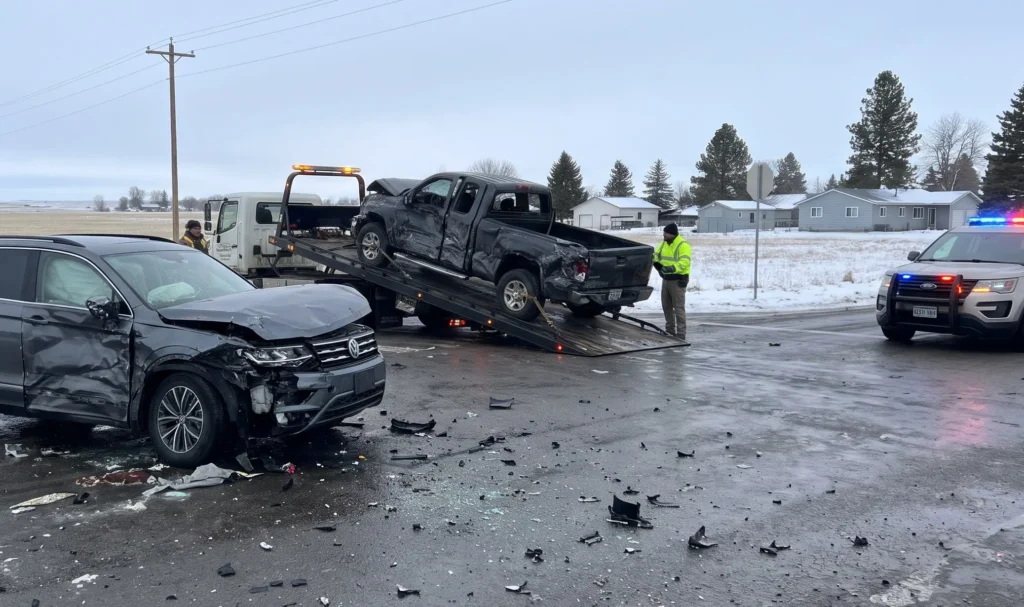
When a car accident exceeds policy limits, the at-fault driver’s insurance company usually pays up to its limit and then stops. Medical bills, lost wages, and other losses above that amount don’t go away. Your options depend on your own insurance, the other driver’s situation, and how your claim is handled from the start. In Montana, drivers only have to carry $25,000 in bodily injury coverage per person, which an ambulance ride, surgery, and a few months off work can pass quickly.
If your medical bills are bigger than the other driver’s coverage, you have choices, and you don’t need to sort them out alone. Miller Tourtlotte Law helps injured Montanans look for every source of coverage that may be available. Call 406-888-2222 or reach out to our team today for a free consultation.
Montana’s Minimum Coverage Is Lower Than Most People Think
Montana law sets a low minimum for liability insurance, and many drivers carry only that minimum. Under MCA § 61-6-103, a Montana motor vehicle liability policy only has to cover $25,000 for the injury or death of one person, and $50,000 total when two or more people are hurt in the same accident. Under MCA § 61-6-301, every owner of a vehicle registered and operated in Montana must keep at least that much coverage, unless an exception such as a certificate of self-insurance applies.
| Minimum Bodily Injury Coverage (MCA § 61-6-103) | Amount |
|---|---|
| Injury or death of one person, one accident | $25,000 |
| Injury or death of two or more people, one accident | $50,000 |
The per-accident cap often surprises families. If you and two passengers are all hurt, everyone may have to share the $50,000 limit, and no one person can get more than $25,000.
Why Serious Injuries Can Quickly Pass $25,000
Serious injuries are expensive, and the costs keep coming. A broken leg, spinal injury, or head injury can mean emergency care, surgery, physical therapy, and weeks or months without a paycheck. Add pain and suffering and future medical care, and a fair value for the claim could be several times the at-fault driver’s policy limits.
What Happens When a Car Accident Exceeds Policy Limits in Montana
You may have several places to look for more money, but each has real limits. The usual order is the at-fault driver’s policy first, then your own coverage, then any other liable parties or the driver personally. The most common paths are:
- The at-fault driver’s liability policy, up to its limits
- Your own underinsured motorist (UIM) coverage, if you have it
- Other at-fault parties, such as an employer whose worker was driving on the job
- Umbrella or excess policies the at-fault driver may carry
- A personal claim against the driver for the amount above coverage
Your Own Underinsured Motorist Coverage
Underinsured motorist coverage is often the most realistic way to close the gap. UIM coverage generally pays when the at-fault driver has insurance, but not enough to cover your damages. Montana does not require drivers to carry UIM, so whether you have it depends on what you bought.
Uninsured motorist coverage works differently, and you may have it unless you turned it down. Under MCA § 33-23-201(1), an insurer can’t issue a policy for a vehicle registered and mainly kept in Montana without uninsured motorist coverage at least at the state minimums. However, MCA § 33-23-201(2) lets the named insured reject it. It generally applies when the at-fault vehicle has no liability coverage, such as in many hit-and-run crashes, and usually won’t help when the other driver is insured but underinsured.
💡 Pro Tip: Look at your declarations page for "UIM" or "underinsured motorist" and write down the limit for each vehicle. That one page can change how much you can recover.
Stacking Multiple Vehicles’ Coverage
If you insure more than one vehicle, you may be able to combine coverage, but the rules are complex. MCA § 33-23-203(1) says that unless the policy specifically provides otherwise, the coverage for one accident is the limit listed for the vehicle involved. The Montana Supreme Court has held that insurers generally can’t enforce anti-stacking provisions when you paid separate premiums for each coverage, so the answer often depends on the policy language and the facts. You can learn more in our guide to UIM stacking in Montana.
Can You Sue the At-Fault Driver Personally?
You may be able to sue the at-fault driver for losses above their policy limits, but collecting is harder. Many drivers with minimum coverage don’t have much property, garnishable wages, or other assets, and the law may protect some property from collection. A large judgment against someone with nothing to collect may pay slowly, in part, or not at all.
That’s why an honest look at the driver’s finances matters before you chase them. A lawyer can check whether the driver owns property, has an umbrella policy, or was working when the crash happened. If the driver was doing their job, their employer and its commercial policy may come into play, and those policies often have much higher limits.
Excluded Drivers Can Complicate Things
Sometimes the person who hit you isn’t covered at all. Montana law may allow a policy to exclude a named household member. If the at-fault driver was an excluded driver, the policy on the car may not pay, which can make your own uninsured motorist coverage especially important.
How Insurers Handle Claims Worth More Than the Policy
When your injuries exceed insurance limits, the at-fault driver’s insurer may face pressure to settle within limits. Montana’s Unfair Trade Practices Act, MCA § 33-18-201, bars insurers from failing to try in good faith to make prompt, fair settlements when liability is reasonably clear. An insurer that unreasonably turns down a chance to settle within limits may be liable for a verdict above those limits. These rules don’t guarantee payment, and a third-party claimant generally can’t sue the insurer under the statute until the underlying claim is resolved.
Your own insurer isn’t automatically on your side, either. When you file a UIM claim, your insurance company is now the one paying, and it may offer less than your claim is worth. Recorded statements, quick releases, and early "final" offers can all hurt you. Before you sign a release with the at-fault driver’s insurer, make sure it won’t wipe out your UIM claim. Many policies require you to notify your UIM carrier first.
💡 Pro Tip: Don’t cash a settlement check or sign anything labeled "release" until you know how it affects your other coverage.
Health Insurance Repayment and the Made-Whole Rule
Your health insurer may want to be paid back from your settlement. Under Montana’s made-whole rule, an insurer generally can’t take repayment from your recovery until you have been fully paid for your losses, including your legal costs. There are exceptions: federal law may override the rule for some plans, such as self-funded employer plans governed by ERISA, and Medicare has its own repayment rights.
Deadlines and Fault Rules That Affect Your Montana Injury Claim
Two rules can shrink or end a Montana injury claim if you ignore them. First, MCA § 27-2-204(1) generally gives you three years to file a personal injury lawsuit. Some exceptions pause the clock, but courts read them narrowly. Insurance policies may also set their own notice deadlines for UIM claims.
Second, Montana uses modified comparative negligence under MCA § 27-1-702. If you are found partly at fault, your damages are generally reduced by your share of the blame. If your share is greater than the fault of the party you’re suing, or the combined fault of all parties you’re suing, you generally can’t recover. Insurers sometimes push blame onto the injured person to reduce what they owe.
Getting Help From Anywhere in Montana
You don’t have to live near Billings to work with us. We help injured people across Montana and can meet by phone or video. Whether you were a driver, passenger, pedestrian, or commercial driver, a car accident exceeds policy limits lawyer can sort through the paperwork, look for coverage you may not have known about, and give you a clear plan.
Frequently Asked Questions
1. What happens if my medical bills are more than the at-fault driver’s policy limits?
The at-fault driver’s insurer generally pays up to its limit and no more. You may then be able to turn to your own UIM coverage, other liable parties, or the driver personally, depending on your policy and the facts.
2. Is underinsured motorist coverage required in Montana?
No. Montana doesn’t require UIM coverage, and you can reject uninsured motorist coverage under MCA § 33-23-201(2). Check your declarations page to see what you have.
3. Can I collect UIM benefits if I was a passenger?
Often, yes. Passengers may be covered under the driver’s UIM policy, their own policy, or a household member’s policy. The policy language controls, so have someone review every policy that might apply.
4. Will accepting the at-fault driver’s policy limits hurt my UIM claim?
It can if you don’t follow your policy’s notice rules. Many UIM policies require you to notify your insurer before settling. Signing a release too early may put your UIM benefits at risk.
5. How long do I have to file a Montana injury claim?
Montana generally allows three years for personal injury lawsuits under MCA § 27-2-204(1). Other claims, such as a UIM claim against your own insurer, may follow different deadlines, and policy notice deadlines may be much shorter. Acting early can help protect your options.
Look at Every Source of Coverage Before You Settle
Low policy limits on the at-fault driver don’t have to decide your recovery. Montana’s $25,000 minimum often falls far short when someone is seriously hurt, but UIM coverage, stacking, other liable parties, and fair claims-handling rules may help close the gap. Each option has limits and deadlines.
If the other driver’s coverage won’t pay for your injuries, let’s talk about where else the money could come from. The team at Miller Tourtlotte Law is ready to review your policies and walk through your options with you. Dial 406-888-2222 or schedule your free consultation today.
Disclaimer: This content is for informational purposes only and is not legal advice. Every case is unique, and results may vary. Consult an attorney about your specific circumstances.