
When Your Family Becomes Your Care Team After a Montana Work Injury
Key Takeaways: A family member may be paid for caring for you after a Montana work injury, but only if the strict conditions in MCA § 39-71-1107 are met. Credible medical evidence must show that home nursing care is needed and describe the caregiver’s duties in reasonable detail. Your treating physician must prescribe the care on the department’s form after a nursing analysis. The services must go beyond normal household chores, and their value must be measurable with reasonable certainty. The insurer generally owes this care only from the date it knows you need it, so notify the insurer early and keep a daily log of hours and tasks. Pay for part-time family care is generally capped at 8 hours a day. Pay for 24-hour family care is capped at the daily statewide average Medicaid nursing home rate, and respite care generally isn’t covered. Skilled nursing tasks must come from a licensed nurse. If your claim is denied or disputed, an experienced workers’ comp attorney can help protect the care your family is already giving.
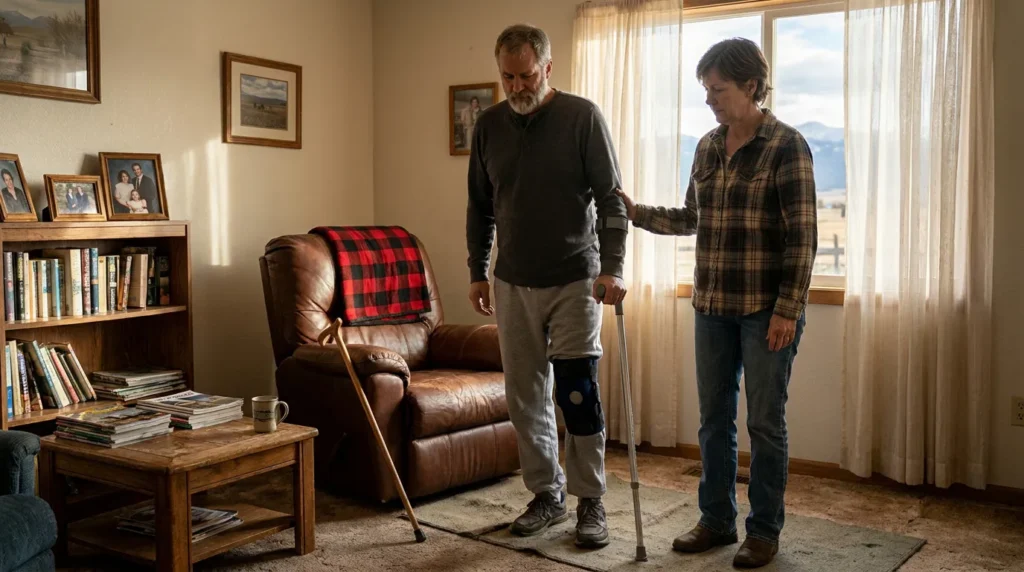
In some cases, a family member may be paid for caring for you after a Montana work injury, but only if certain conditions are met. Montana law generally requires workers’ comp insurers to provide reasonable home care that is medically necessary because of the work injury. A spouse, parent, or adult child may sometimes be paid for that work. The rules are strict, though, and pay is capped.
If your family has been caring for you without pay, or the insurer has denied a request for home care, you can talk with someone who handles these claims every day. Miller Tourtlotte Law represents injured workers anywhere in Montana by phone, by video, or in person at our Billings office. Call 406-888-2222 or contact us now to talk through your situation.
What Montana Law Says About Workers Comp Home Health Care
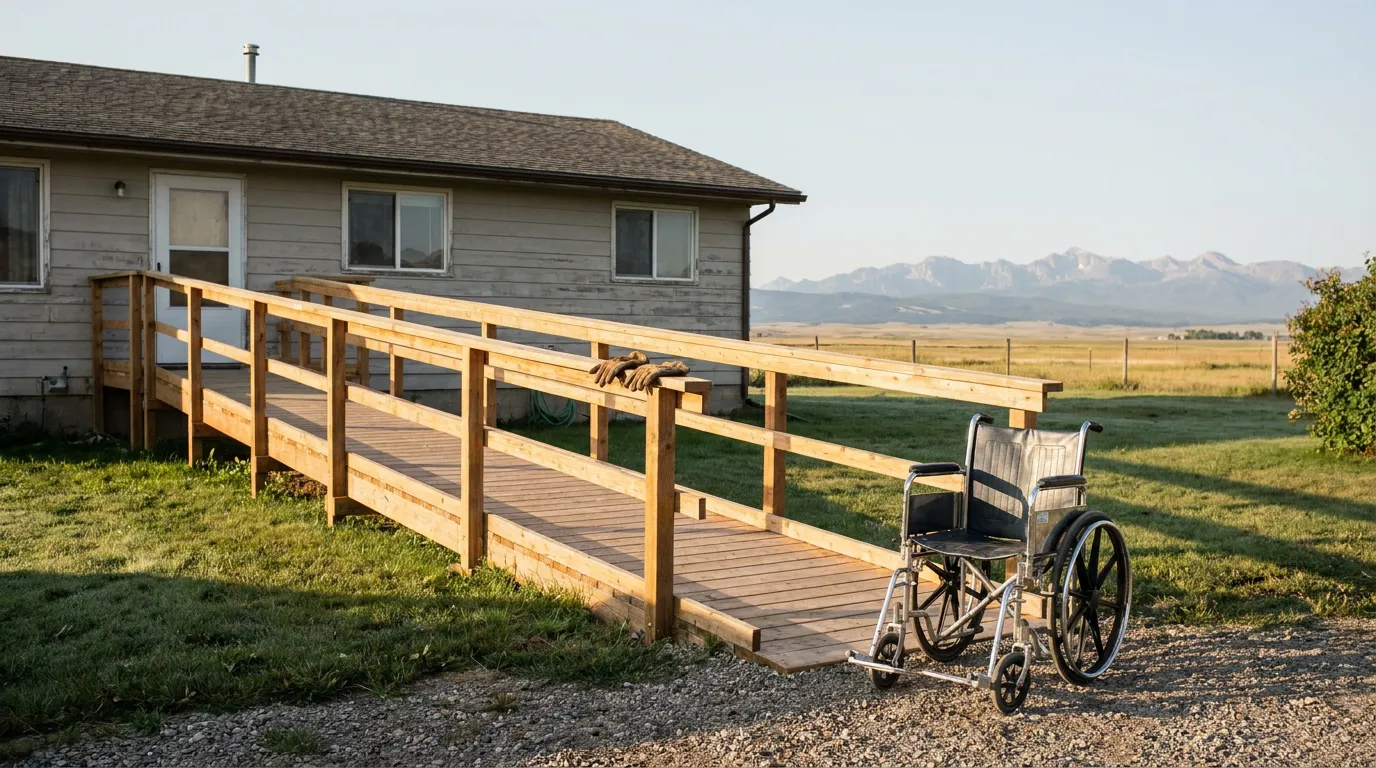
Workers comp home health care in Montana starts with a basic duty the insurer owes you. Under MCA § 39-71-704(1)(a), the insurer must provide reasonable primary medical services for conditions caused by your work injury. These medical benefits are separate from wage-loss benefits and paid on top of them. Secondary medical services are covered only when medically necessary. For a broader look at what you’re owed, see our guide to your right to benefits in Montana.
The rules for home care, which the statute calls "domiciliary care," are in MCA § 39-71-1107. Subsection (1)(a) says the insurer must provide reasonable domiciliary care starting on the date it knows you need home medical services because of your industrial injury. The key word is "knows." The insurer’s duty generally doesn’t begin until it has notice, so families who give care for months without telling anyone may have trouble getting paid for that earlier time. You can read the full text of the Montana domiciliary care statute on the Legislature’s website.
The Five Conditions Family Care Has to Meet
Montana’s workers’ comp law doesn’t pay for family care automatically. Under MCA § 39-71-1107(1)(b) through (e), the care must meet each of these requirements:
- Medical proof: The preponderance of credible medical evidence must show that home nursing care is needed because of the accident.
- Specific duties: That evidence must describe, in reasonable detail, what the caregiver will actually do.
- Doctor’s prescription: The treating physician must prescribe the care on a Department of Labor and Industry form after a nursing analysis, and the care must happen under the physician’s direction.
- Beyond household chores: The services must go beyond normal household duties.
- Measurable value: It must be possible to put a dollar value on the services with reasonable certainty.
In practice, a claim often depends on the medical paperwork. A note saying "patient needs help at home" is often not enough. A detailed nursing analysis listing transfers, wound care, medication management, and toileting help gives the claim a stronger base.
Why Ordinary Chores Usually Don’t Count
Routine cooking, cleaning, and laundry are generally not covered, even when your spouse does far more of them since your injury. The law pays for care, not the normal work of running a home. Helping you in and out of the shower after a spinal injury may count as care. Doing the dishes generally does not.
💡 Pro Tip: Have your caregiver keep a daily log with start and end times and the specific tasks done, like "helped with transfer to wheelchair, 7:10 a.m." A log like this can help meet the "reasonable certainty" requirement and is harder to dismiss than a rough estimate made months later.
How Much Montana Workers Comp Caregiver Pay Can Be
How much a family caregiver may be paid depends on whether you need care around the clock or only part of the day. Both have caps, and the caps often fall short of what professional care would cost.
| Situation | Who Can Provide Care | Payment Limit | Key Limitation |
|---|---|---|---|
| 24-hour care needed (MCA § 39-71-1107(3)) | Family member (non-licensed care) | Daily statewide average Medicaid nursing home reimbursement rate for the current fiscal year | Insurer not responsible for respite care |
| Less than 24-hour care (MCA § 39-71-1107(4)) | Family member (non-licensed care) | Area hourly mean wage for home health aides, per Montana Informational Wage Rates by Occupation | Max 8 hours per day, at the rate in effect when care is given |
| Skilled nursing care (MCA § 39-71-1107(2)) | Licensed nurse only | N/A for unlicensed family members | Unlicensed relatives can’t be paid for this work |
The Respite Care Gap
When a family member provides 24-hour care, the statute says the insurer is not responsible for respite care. Respite care is substitute care that lets the main caregiver take a break. A spouse caring for a worker with a catastrophic injury may go weeks without real time off. Plan for this early.
The 8-Hour Ceiling on Part-Time Care
If you need less than 24-hour care, the insurer doesn’t have to pay a family caregiver for more than 8 hours a day. Your family may be doing 10 or 12 hours of hands-on care, but anything past 8 may go unpaid. The hourly rate can also change each year.
When Only a Licensed Nurse Will Do
Under MCA § 39-71-1107(2), care that counts as nursing under Title 37, chapter 8 must be provided by a licensed nurse. A relative who isn’t licensed can’t be paid for that skilled work, even if they’ve learned to do it.
This can cause problems at home. Some families have a nurse come in for skilled tasks while a spouse handles attendant care the rest of the day. Insurers sometimes use this line to cut what they pay a family caregiver. If you disagree about how a task is classified, get the treating physician and a lawyer involved.
Common Ways Insurers Push Back on Family Attendant Care Benefits
Insurers often resist paying family members, and their reasons tend to follow a pattern. They may say the medical evidence is too thin, call the care "household help," question the hours, or send you to a medical exam with a doctor they choose. Montana’s workers’ comp system is a trade-off: in most cases, injured workers can’t sue their employers, and in return they get workers’ compensation benefits. When an insurer stalls on care you truly need, it breaks that deal.
Be Careful With Insurer-Arranged IMEs
An independent medical examination ordered by the insurer may be part of an adversarial process, not a neutral checkup. The insurer could use the exam to argue you don’t need home care at all. Under Montana law, unreasonably refusing to attend an exam can get your benefits suspended, so skipping one isn’t safe either. Talk with an attorney before you go.
When to Bring in a Lawyer for In-Home Care by Relatives
If your injury is serious enough that family members are caring for you, your claim may be serious enough to need a lawyer. A Billings workers comp attorney can help you gather the right medical evidence, get the prescription form filled out correctly, and fight denials. Unlike many large Montana personal injury firms, we make workers’ comp a core focus of our practice. We help people hurt on the job in Montana who don’t already have a lawyer and whose claim has been denied, delayed, or disputed, or whose benefits are being cut.
Frequently Asked Questions
1. Can my spouse be paid for caring for me under Montana workers’ comp?
Possibly. Under MCA § 39-71-1107, a spouse may be paid if credible medical evidence shows home nursing care is needed and describes the duties, your treating physician prescribes the care on the department’s form after a nursing analysis, the care goes beyond normal household duties, and its value can be measured with reasonable certainty. Pay limits apply.
2. Will workers’ comp pay my family for care they gave before the insurer knew?
Generally, no. Under MCA § 39-71-1107(1)(a), the insurer’s duty starts on the date it knows you need home medical services, so earlier care may be hard to recover. Notify the insurer as early as you can.
3. Does workers comp home health care in Montana cover a break for my caregiver?
When a family member provides 24-hour care, MCA § 39-71-1107(3) says the insurer is not responsible for respite care. Families should plan for this gap.
4. Can a family member do wound care or other nursing tasks and get paid?
If the task counts as nursing care under Title 37, chapter 8, MCA § 39-71-1107(2) requires a licensed nurse to provide it. An unlicensed relative can’t be paid for that work.
5. What records should we keep for workers comp home care reimbursement?
Keep a daily log of hours and specific tasks, copies of the physician’s prescription and nursing analysis, and all letters to and from the insurer. Good records can help show the value of the services with reasonable certainty.
Protecting the Care Your Family Is Already Giving
Montana workers comp home health care may pay family members, but only within tight limits. You need strong medical evidence, a physician’s prescription on the department’s form, care that goes beyond household chores, and solid records. Even then, part-time care is capped at 8 hours a day, 24-hour care has a daily limit, respite isn’t covered, and skilled nursing must come from a licensed nurse.
If your family is doing the work and the insurer isn’t paying its share, you don’t have to handle it alone. Miller Tourtlotte Law works with injured workers across Montana, whether you’re in Billings or hours away. Call 406-888-2222 or schedule your consultation today.
Disclaimer: This content is for informational purposes only and is not legal advice. Every case is unique, and results may vary. Consult an attorney about your specific circumstances.