
The Turning Point in Your Claim That Nobody Warns You About
Key Takeaways: Maximum Medical Improvement (MMI), called "maximum healing" in the statute, is generally the point when further material functional improvement would not reasonably be expected from primary medical services, as defined in Section 39-71-116, MCA. It does not mean you are healed, you can be at MMI and still live with daily pain and permanent restrictions. MMI generally means your benefits may shift from temporary total disability toward permanent partial or permanent total disability, and an impairment rating may be assigned under Section 39-71-711, MCA, that can influence your payout. Separately, for injuries on or after July 1, 2011, Section 39-71-704, MCA, generally terminates medical benefits 60 months from the date of injury or diagnosis, subject to exceptions and a limited right to petition to reopen. Insurer-arranged "independent" medical exams are often used to lock in an early MMI date or a low impairment rating, and disputes between your doctor and theirs may be raised through mediation and the Workers’ Compensation Court. If you received an MMI letter, a rating, or a fast settlement offer, have it reviewed before you sign anything.
If you got hurt on the job in Montana, you may eventually hear three letters that can change everything: MMI. Maximum Medical Improvement is generally the point when your doctor determines your condition has stabilized and further material functional improvement is not reasonably expected. Under Section 39-71-116, MCA, that definition is the legal trigger that can shift your wage-loss benefits from one category to another. It does not mean you are healed, it generally means the medical picture has leveled off.
Reaching MMI is where claims quietly go sideways, because the insurer’s obligations can change and most people never got a heads-up. If you just got a letter about MMI or an impairment rating and have no idea what comes next, talk to Miller Tourtlotte Law before you sign anything. Call 406-888-2222 or reach out to our team now and we will walk you through where you stand.

What Does MMI Mean in Plain English?
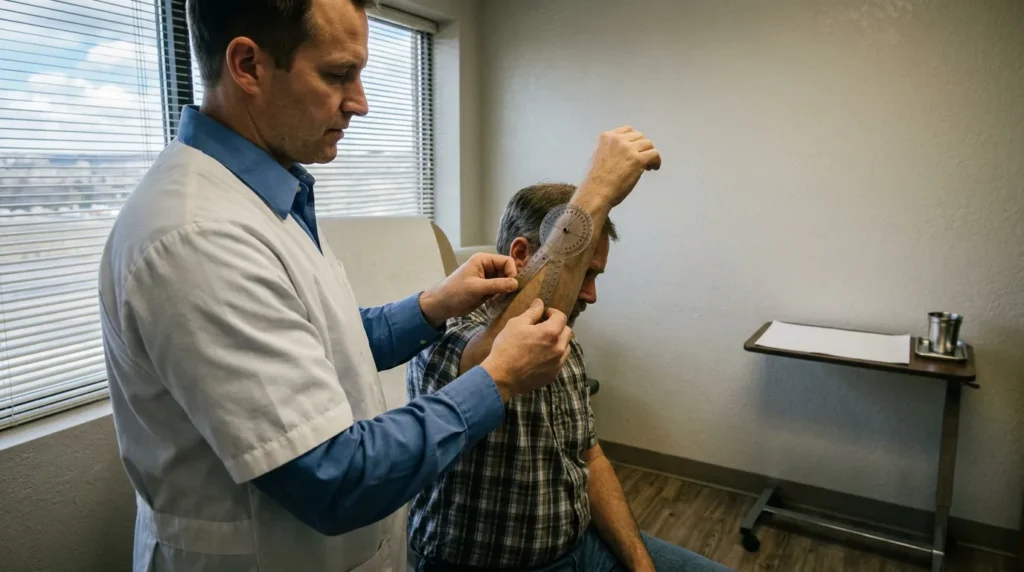
Maximum Medical Improvement is a medical judgment call with significant legal consequences. Your treating physician generally makes the determination, certifying that your condition has stabilized and additional treatment is not likely to produce meaningful further improvement. That is narrower than most people assume, and it is not necessarily permanent, if your condition later deteriorates, Montana’s Workers’ Compensation Court has recognized that a worker may no longer be at MMI.
Here is the part that surprises people: you can reach MMI and still hurt every single day. A welder with a fused spine or a truck driver with nerve damage may all be at MMI. Workers comp medical stability is generally about the trajectory of the injury, not whether you feel fine.
Why the Label Carries So Much Weight
MMI is often the hinge between temporary and permanent benefits. Before MMI, an injured worker who cannot work may receive temporary total disability (TTD) benefits, which generally exist until maximum medical healing. After MMI, the analysis generally shifts toward permanent partial disability (PPD) or, in more serious cases, permanent total disability, a classification that under Section 39-71-116, MCA, generally cannot be established until after maximum healing, and the numbers are typically calculated differently.
That shift is why the date matters so much. An early MMI date can cut off wage benefits sooner and may reduce what the insurer owes. TTD can also end even before MMI when the treating physician releases you to a same, modified, or alternative position with the same employer at an equivalent or higher wage under Section 39-71-701, MCA. For more, see our breakdown of permanent vs. temporary disability.
How Maximum Medical Improvement Montana Workers Comp Rules Actually Work
Montana’s workers’ compensation system generally runs under Title 39, Chapter 71, MCA, and ARM Title 24, Chapter 29. The Employment Standards Division of the Montana Department of Labor & Industry administers those Montana work comp regulations, with the Workers’ Compensation Claims Assistance Bureau handling claims-related functions. This framework generally governs how insurers adjust your benefit status once a treating physician signs off.
In practice, the sequence often looks like this: you report the injury, get authorized treatment, the insurer accepts or denies the claim, you may receive wage-loss benefits while off work, and then a provider may declare MMI. From there, an impairment rating may be assigned, feeding into the PPD calculation.
That is the standard arc, but whether it plays out cleanly depends on your diagnosis, work restrictions, wage history, date of injury, and whether the insurer agrees with your doctor.
| Stage | What is generally happening | What to watch for |
|---|---|---|
| Before MMI | Active treatment; TTD benefits if you cannot work | Delayed authorizations, denied procedures |
| At MMI | Physician certifies further improvement is not expected | Notice from the insurer changing your benefit status |
| After MMI | Impairment rating; PPD analysis; possible settlement talks | Statutory medical benefit deadlines, lowball offers |
When the MMI Date Feels Wrong
Doctors do not always agree, and that disagreement is at the heart of many disputes. Your surgeon may want to try another procedure while the insurer’s chosen physician says you are done improving. Montana law generally provides administrative channels to contest benefit decisions, which may include mediation through the Department of Labor and Industry and, if unresolved, a petition to the Workers’ Compensation Court. Deadlines apply at each stage.
These processes are generally separate from any civil lawsuit you might have. A third-party injury claim, for example, may follow its own track with its own deadlines. Do not assume filing one protects the other.
The Independent Medical Exam Is Not a Neutral Checkup
When an insurer schedules an "independent" medical examination, it helps to understand what may really be happening. That exam is generally arranged and paid for by the party that benefits if your entitlement shrinks, and in our experience these evaluations are frequently used to pin down an early MMI date, hold down an impairment rating, or question whether your condition is work related. It can be an adversarial step, not a second opinion you asked for.
Unreasonably refusing a properly requested examination can lead to suspension of your benefits under Montana law, which can put injured workers in a difficult spot. That is why you may want to speak with a Billings workers comp lawyer before the appointment, not after the report lands.
💡 Pro Tip: Ask your treating provider to document your permanent restrictions in specific, functional terms (pounds lifted, hours standing, overhead reach) rather than general phrases. Vague restrictions can be easier for an insurer to discount later.
What Happens to Your Medical Care After MMI
This is where many Montanans feel the floor drop out. Montana’s workers’ comp bargain was generally framed this way: workers gave up the right to sue their employer in exchange for no-fault benefits. Legislative changes since 2011 narrowed the worker’s half of that deal: under Section 39-71-704(1)(f), MCA, medical benefits for injuries occurring, or occupational diseases diagnosed, on or after July 1, 2011 generally terminate 60 months from that date. That cutoff runs from the date of injury or diagnosis, not from your MMI date, and does not apply to workers who are permanently totally disabled or to repair/replacement of a qualifying prosthesis. Claims with earlier injury dates fall outside that automatic cutoff, though medical benefits on those claims can still be closed by settlement or court order.
Practically speaking, an MMI declaration may be followed by a notice about your ongoing treatment while a separate statutory deadline approaches. Limited maintenance or palliative care may still be available depending on the injury, and Section 39-71-717, MCA, allows a worker to petition to reopen medical benefits terminated under the 60-month rule if the condition results directly from the compensable injury and treatment is needed to allow the worker to keep working or return to work. That petition must generally be filed within five years of termination and no more than 90 days before benefits terminate, and benefits closed by settlement or court order are not subject to reopening. Whether this applies to you is fact-dependent, have someone review the notice rather than assuming it is final.
Red Flags That Should Make You Pick Up the Phone
Some MMI situations resolve on their own, and plenty do not. Insurance companies know that people under financial pressure want the stress to stop, and a fast offer can look like generosity when it is really a discount. Watch for these signs:
- An MMI determination issued right after an insurer-arranged exam, especially when it contradicts your treating physician
- A settlement offer that arrives before you have an impairment rating or a clear picture of your permanent restrictions
- A notice terminating medical care while you still have pending referrals or recommended procedures
- No discussion of vocational rehabilitation when you cannot return to your old job
- Pressure to sign paperwork quickly, or a suggestion that you do not need to review it with anyone
If more than one of those describes your situation, that may be a reasonable moment to get advice. Most people do not hire a lawyer because they want to fight; they do it because the paperwork stopped making sense. Our maximum medical improvement Montana workers comp lawyer team handles these claims day in and day out, which is not something every injury firm in Montana can say.
Frequently Asked Questions
1. Does reaching MMI mean my Montana injured worker benefits stop?
Not necessarily. MMI generally shifts you from temporary disability benefits toward permanent partial or permanent total disability analysis rather than ending everything. Medical benefits are governed separately: for injuries on or after July 1, 2011, they generally terminate 60 months from the date of injury or diagnosis under Section 39-71-704, MCA, subject to exceptions, so review any notice carefully.
2. Who decides when I have reached MMI?
Your treating physician typically makes the call by certifying that further material functional improvement is not reasonably expected. An insurer-arranged examiner may reach a different conclusion, and when opinions conflict, the disagreement can be raised through the state’s dispute resolution process, with the Workers’ Compensation Court resolving contested cases.
3. Can I keep treating after a Montana work injury MMI determination?
Sometimes, depending on the injury, your date of injury, and applicable statutory provisions. Some workers obtain approval for limited ongoing care, and some whose benefits terminated under the 60-month rule may petition to reopen them under Section 39-71-717, MCA, while others face full closure. Because the outcome turns on your specific facts and filing deadlines, do not treat a denial letter as final without having it reviewed.
4. What is an impairment rating and how does it affect my payout?
After maximum healing, an impairment evaluator may assign a percentage of whole-person permanent impairment. Under Section 39-71-711, MCA, that rating is a purely medical determination, must be based on the sixth edition of the AMA Guides to the Evaluation of Permanent Impairment, and must rest on objective medical findings rather than complaints of pain alone. That percentage may then factor into the PPD calculation along with statutory elements such as age, education, wage loss, and physical restrictions, so a low rating can meaningfully reduce what you receive.
5. Do I have to attend the insurer’s medical exam?
Unreasonable refusal can lead to a suspension of benefits, so this is not a decision to make alone. Talk with an attorney first so you understand what the exam is designed to accomplish and how to protect your claim. General background on how Montana claims proceed is available through the state’s workers’ compensation FAQ.
Where This Leaves You
Maximum Medical Improvement is a medical conclusion that can carry legal weight, often arriving at the exact moment when many injured workers are least equipped to push back. It may change your benefit category, trigger an impairment rating, and open the door to a settlement conversation you did not ask for. None of that means the insurer’s version of your MMI status is correct, and none of it means you have to accept the first number you are offered. Outcomes depend heavily on the medical record, your restrictions, your date of injury, and the specific statutory provisions that apply to your claim.
You do not need to have it all figured out before you call. Miller Tourtlotte Law works with injured Montanans in Billings and across the state, and we are happy to look at your MMI letter, your rating, or that pile of forms and tell you what it actually means. Reach out through our Billings office or call 406-888-2222 to get a straight answer about your next step.
Disclaimer: This content is for informational purposes only and is not legal advice. Every case is unique, and results may vary. Consult an attorney about your specific circumstances.